

On April 9, the 2026 Annual Conference of the Chinese Society for Cell Biology (CSCB) in Hefei, together with the 16th International Federation for Cell Biology (IFCB) and the 10th Asia-Pacific Organization for Cell Biology (APOCB) Congress (International Symposium on Multicellularity), orchestrated an interactive atmosphere for global communication and collaboration. Delegations from several societies including Australian/New Zealand Society for Cell & Developmental Biology, Japanese Society for Cell Biology, Philippine Society for Cell Biology, Singapore Society for Cell Biology and European Molecular Biology Organization have joined in Chinese Society for Cell Biology and International Federation for Cell Biology. There were more than two thousand attendees who synergized the exciting international gathering for global cell biology. Dr. Ye-Guang Chen had chaired the APOCB assembly meeting to initiate the global events on multicellularity.
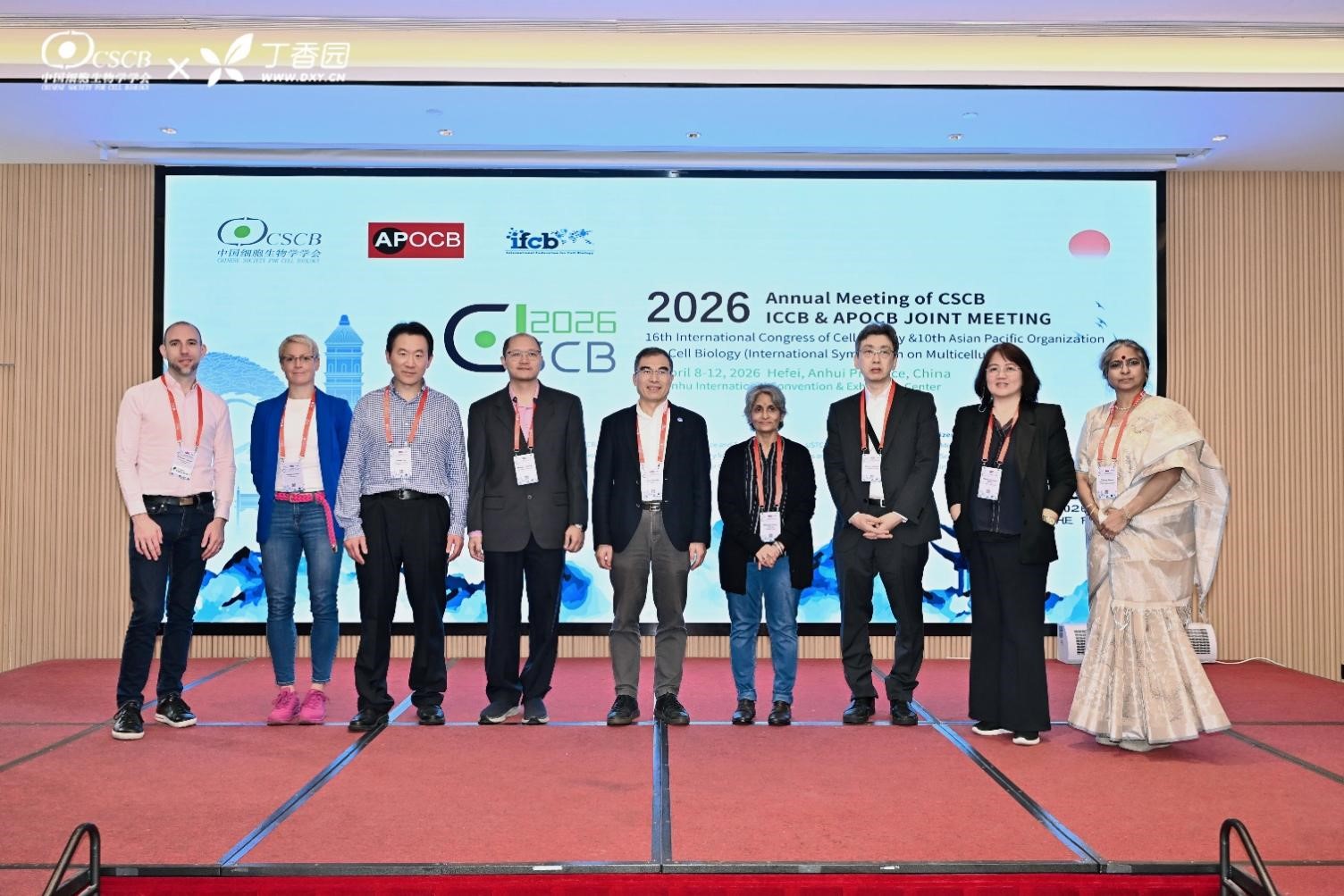
As an important element of the APOCB-CSCB-ICCB2026, the APOCB-PSCB Joint Symposium (S02 Session – Cellular Dynamics and Disease), co-chaired by Associate Professor Xiaoyu Song of the University of Science and Technology of China (USTC) and Professor Michael C. Velarde of the University of the Philippines, was successfully convened on the morning of April 9. Focusing on the core mechanisms of cellular dynamics and their links to diseases, the symposium brought together scholars from local and abroad to share cutting-edge research findings in the field, providing critical insights for basic research and clinical drug development in related diseases.
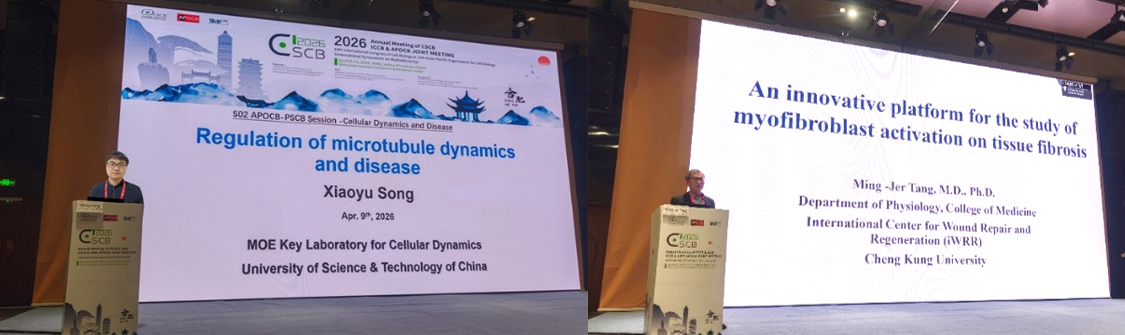
The symposium opened with an excellent presentation titled "Microtubule Dynamics Regulation and Diseases" delivered by Associate Professor Xiaoyu Song. He centered on the physicochemical properties of phase separation in microtubule-associated proteins, the regulatory mechanisms underlying post-translational modifications governing microtubule dynamics, and their functional roles in cellular turnover and quality control, laying a theoretical foundation for the development of chemical intervention strategies targeting microtubule dynamics.
Professor Michael C. Velarde addressed the impact of environmental toxins on cancer therapy. His research revealed that bisphenol A (BPA) reduces the efficacy of chemotherapy in breast cancer by inducing the expression of drug resistance-related proteins, suggesting a mechanism by which environmental exposure drives cancer cell drug resistance through epigenetic regulation. This finding offers important clues for understanding the role of environmental factors in cancer treatment.
Professor Ming-Jer Tang from Cheng Kung University, Taiwan (China), presented an innovative platform for monitoring myofibroblast activation, enabling real-time tracking of myofibroblast differentiation and functional status changes. This platform provides a novel research tool for investigating the pathogenesis of fibrotic diseases, offers an innovative technical framework for drug discovery, and identifies potential lead compounds for the treatment of organ fibrosis.
Professor Ke Ruan (from USTC) reported their recent breakthroughs in multiple myeloma treatment. Utilization of nuclear magnetic resonance (NMR) spectroscopy and structure-based lead compound optimization, his team identified small molecules that specifically target and modulate PHF19 protein condensates, establishing a new intervention strategy for multiple myeloma.
Professor Mariquit M. Delos Reyes of De La Salle University (Philippines) focused on the development of natural product-based anticancer agents. Through cell phenotypic profiling and molecular target identification, her group isolated and characterized multiple anticancer-active natural compounds from endemic Philippine plants and marine microorganisms, providing valuable resources for the discovery of novel anticancer drugs.
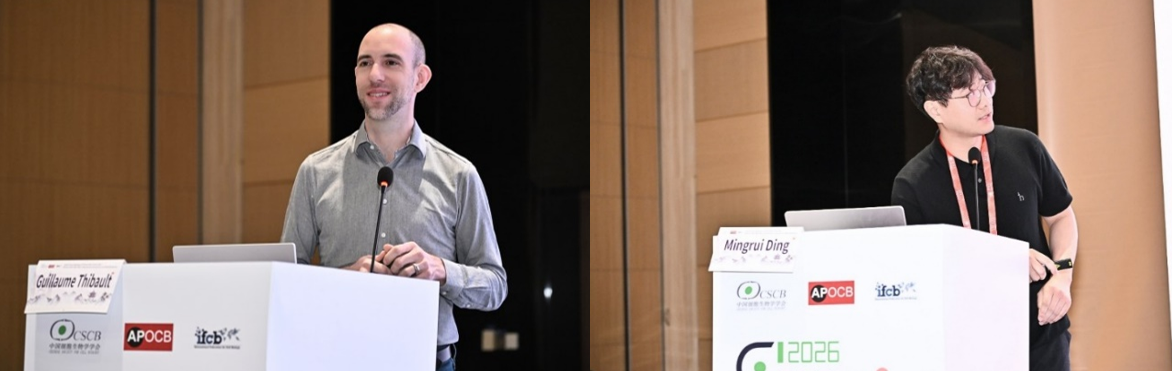
Professor Guillaume Thibault of Nanyang Technological University (Singapore) shared a new mechanism by which gut bacterial metabolism impairs wound healing. He elucidated the molecular pathway through which Enterococcus faecalis delays chronic wound healing by secreting H₂O₂ and triggering endoplasmic reticulum stress, offering new strategies for the treatment of chronic wound infections.
Professor Mingrui Ding of ShanghaiTech University presented key discoveries in the mechanistic study of inherited disorders. His work delineated the physiological and pathological roles of biomolecular condensates, providing novel mechanistic insights into X-chromosome inactivation and neurodevelopmental disorders, and shedding new light on the molecular basis of developmental defects and neurodegenerative diseases.
Professor Jose Enrico H. Lazaro of the University of the Philippines Diliman introduced the discovery of novel antidepressant compounds using metabolomics combined with genome mining. These compounds exhibited superior monoamine reuptake inhibition activity compared to control drugs and also hold potential for anticancer development.
Bringing together scholars from Chinese (mainland and Taiwan region), the Philippines, and Singapore, the symposium covered diverse research areas including cell division, signaling pathways, microbial pathogenesis, and drug screening. It achieved in-depth integration of basic research and clinical translation, establishing a vital platform for academic exchange, technological innovation, and collaborative advancement in the field of cellular dynamics and diseases.
© Copyright Asian-Pacific Organization for Cell Biology All rights reserved.